Average Vacation Days Canada Vs US (2026): What SMB Teams Need to Know
Understand the key differences in average vacation days and parental leave between Canada and the US, and how TimeOff Manager helps SMBs navigate cross-border HR compliance in 2026.


Understand the key differences in average vacation days and parental leave between Canada and the US, and how TimeOff Manager helps SMBs navigate cross-border HR compliance in 2026.
Canadians get at least 10 paid vacation days by law, often more; the US guarantees none, with the average American worker receiving about 11 days. This fundamental difference impacts how you structure your policies and utilize PTO software, especially if you operate in both countries or plan to expand across the border. Navigating these varied entitlements, from vacation accruals to parental leave, requires precise tracking to maintain HR compliance in 2026.
Why Disjointed Accrual Tracking Breaks Today's SMBs
You already know the headache: you're trying to manage employee time off across different regions, maybe even different countries, and the rules just don't line up. One manager approves PTO without realizing another employee in a different province has statutory leave that needs to be prioritized. You're trying to keep up with varying provincial entitlements in Canada while also managing the more varied, often employer-defined, policies in the US.
This often leads to a mess of spreadsheets, where vacation days are tracked manually, often edited after the fact, and rarely integrated with actual time punches. Your payroll provider asks for leave data, and you're scrambling to reconcile disparate records. This isn't just inefficient; it's a compliance risk. A timezone mismatch or a miscalculated accrual can lead to errors that impact employee trust and expose your business to audits, especially with the evolving landscape of HR compliance in 2026.
Imagine the scenario: an employee in Ontario is entitled to two weeks of vacation after one year, while an employee in New York has a different, company-defined accrual. Without a centralized system, you're juggling conflicting information, leaving you vulnerable to mistakes and unable to see your true team availability or potential overtime impacts.
Understanding Average Vacation Days: Canada vs. US (2026)
The distinction in vacation entitlement between Canada and the United States is stark and forms a critical part of HR compliance in 2026. In Canada, vacation time is a statutory right, meaning it's mandated by law at both federal and provincial levels. Generally, employees are entitled to at least two weeks (10 days) of paid vacation after one year of employment, often increasing to three or four weeks after several years of service. This also comes with vacation pay, typically 4% of gross wages for two weeks of vacation, increasing with entitlement.
The US, however, operates differently. There's no federal law mandating paid vacation days. Employers typically offer vacation as a benefit to attract and retain talent, but the specific policies—how many days, how they accrue, and carryover rules—are entirely up to the company. The average American worker often receives around 11 paid vacation days, but this isn't a legal guarantee. This employer-discretion model means your US policies need to be clearly defined and consistently applied to avoid discrimination or disputes.
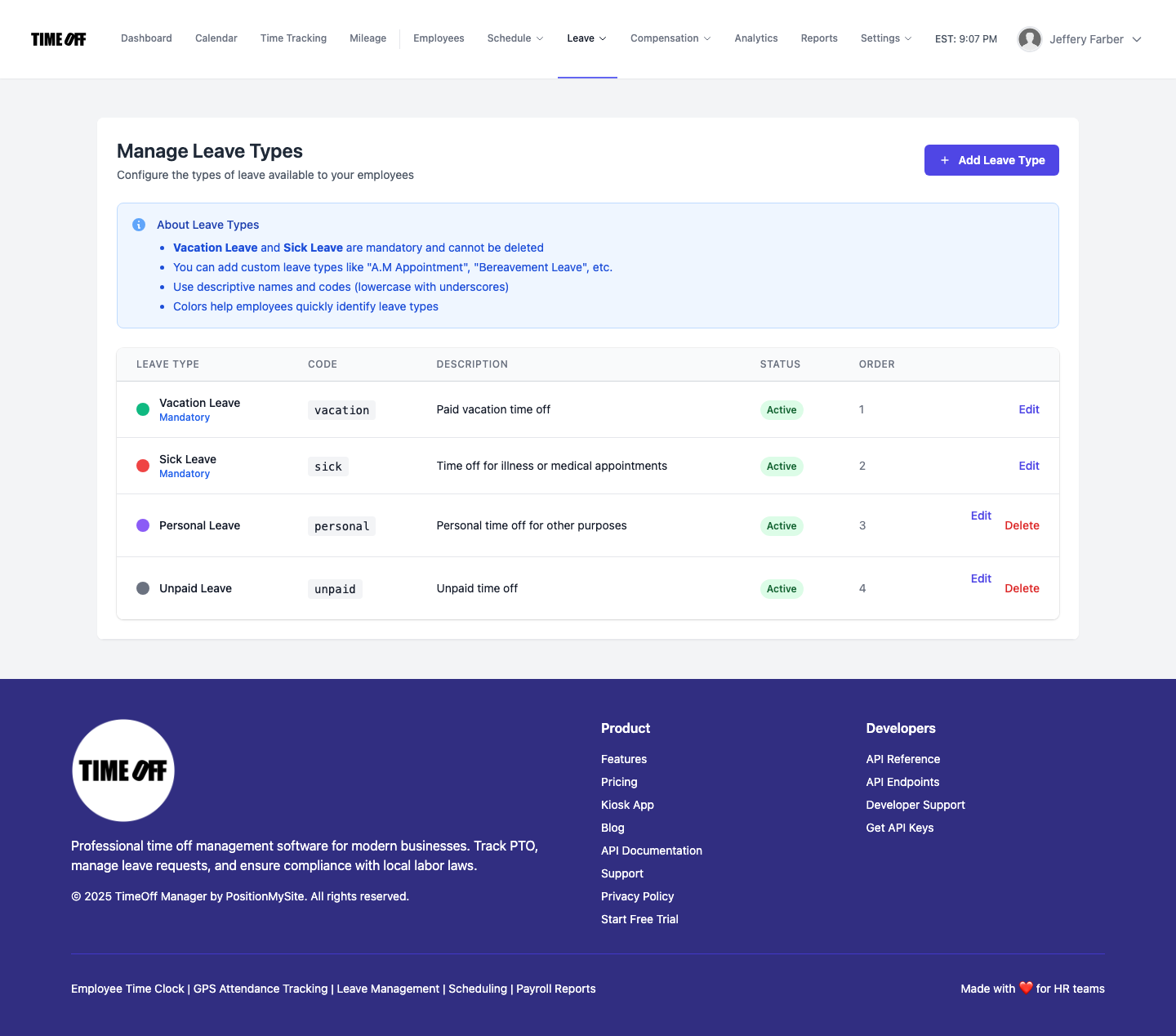
For SMBs operating in both countries, this means you can't have a one-size-fits-all PTO policy. You need a system that can handle both statutory entitlements and custom, company-defined policies. TimeOff Manager lets you set up custom leave types and accrual rules tailored to each region or even specific employees, ensuring you meet all legal obligations while maintaining flexibility for your US operations.
Navigating Parental Leave and Vacation Entitlements Across Borders
Parental leave also highlights significant differences between Canada and the US, impacting HR compliance in 2026. In Canada, federal and provincial laws provide robust parental leave benefits. For instance, under the Employment Insurance (EI) program, new parents can share up to 69 weeks of parental benefits, with job protection guaranteed under labor laws. This comprehensive system ensures employees can take significant time off to care for newborns or newly adopted children without fearing job loss.
In the US, the Family and Medical Leave Act (FMLA) provides up to 12 weeks of *unpaid*, job-protected leave for eligible employees for family and medical reasons, including the birth or adoption of a child. Some states and individual employers offer paid parental leave, but it's not a federal mandate. This patchwork of state and company policies means you need a flexible leave management system that can track both FMLA-protected leave and any company-provided paid parental leave, alongside statutory Canadian entitlements.
TimeOff Manager allows you to configure specific leave types for various parental leave scenarios, whether it's Canadian EI-eligible leave or US FMLA-protected leave. You can track balances, manage requests, and ensure that employees are taking the correct type of leave for their situation. This level of detail is crucial for avoiding compliance pitfalls and providing accurate records for payroll and legal purposes.
When an employee submits a leave request, you can see their full history and current balances right in the Manager & HR hub at /admin/requests. This prevents blind approvals and ensures you're applying the correct policies based on their location and eligibility.
Tracking Vacation Entitlement Across Provinces and States with HR Software
Managing vacation entitlements isn't just about Canada vs. US; it's also about the nuances within Canada's provinces and US states. Each Canadian province has its own labor standards act dictating minimum vacation time, pay, and when it must be taken. For example, while two weeks is common, some provinces might have slightly different accrual rates or rules for carryover. Similarly, in the US, while there's no federal mandate, states like California have specific rules regarding accrued but unused vacation time, often requiring it to be paid out upon termination.
Trying to track these variations manually using spreadsheets is a recipe for errors. You need a robust PTO software solution that allows for granular control over leave policies. TimeOff Manager lets you define custom leave policies for different groups of employees, which can be segmented by location (e.g., "British Columbia Employees" vs. "Texas Employees"). This means you can set up distinct accrual rules, carryover limits, and eligibility criteria for each group, ensuring compliance with local laws while providing transparency to your team.
Our custom leave types feature is central to this. You can create "Alberta Statutory Vacation," "Quebec Annual Leave," or "California PTO" as separate categories, each with its own rules for accrual, maximum balance, and whether it's paid or unpaid. This ensures that when an employee requests time off, the system automatically applies the correct rules based on their assigned leave type.
What Integrated Actually Means for Cross-Border HR
When I talk about "integrated," I'm talking about more than just a buzzword. For SMBs managing teams across Canada and the US, it means a single source of truth for all your HR data. No more trying to match vacation requests from one system with time punches from another, or reconciling different spreadsheets for payroll. This is what TimeOff Manager delivers:
- One Employee Record: All employee information, including their assigned leave policies, time zone, and work location, lives in one place. You update it once, and it's consistent across the platform.
- One Clock Surface: Whether employees are clocking in via a PIN kiosk, web, or mobile with GPS time clock, all punches feed into the same system. This eliminates discrepancies between reported hours and actual attendance.
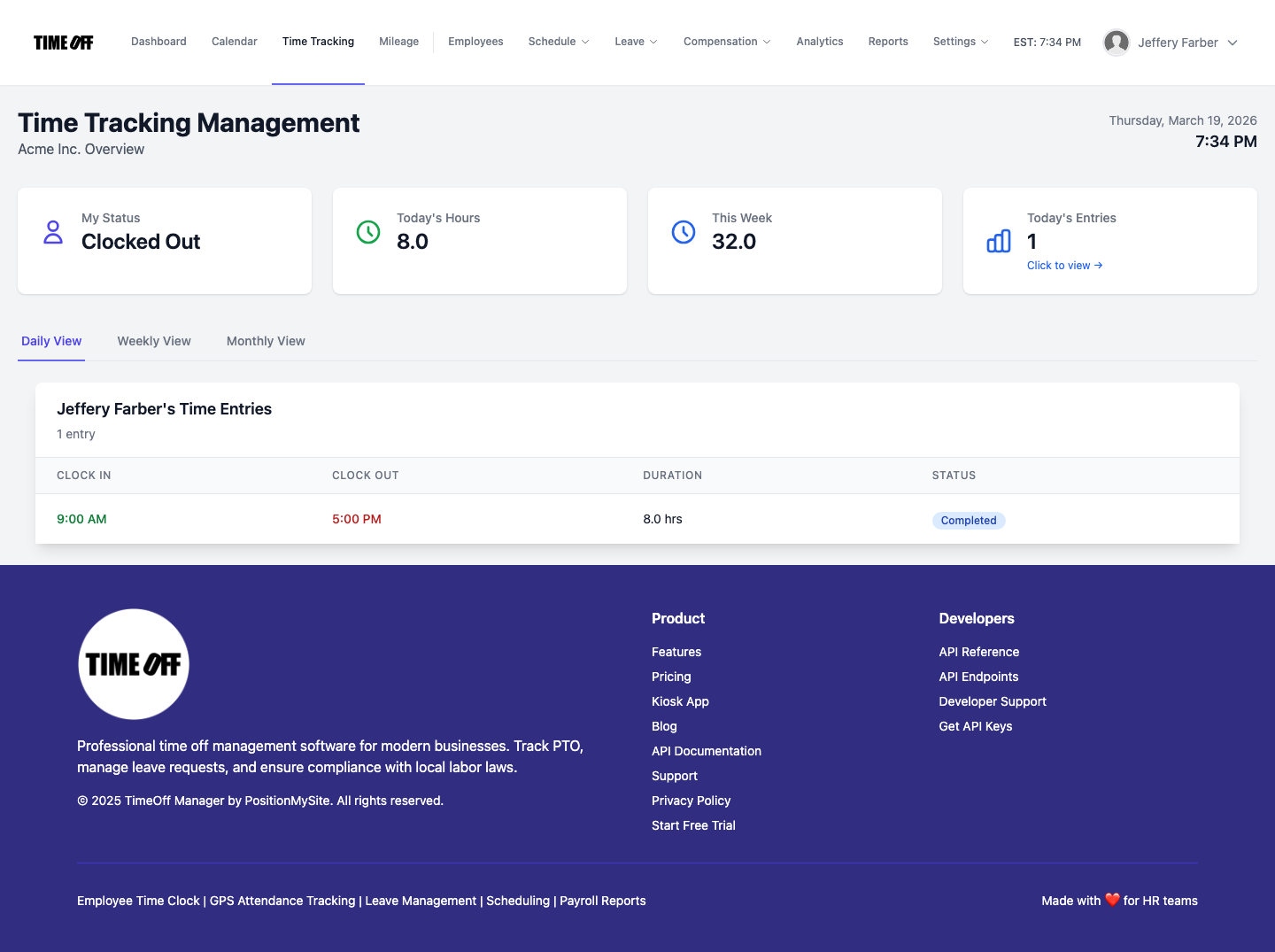
- One Weekly/Pay-Period View: Supervisors and HR can see a comprehensive view of all employee hours, including regular time, overtime, and approved leave, in one unified Manager & HR hub at /timesheet. This holistic view is crucial for catching potential issues before payroll.
- Reports That Match Approvals: Your analytics and exports directly reflect approved leave requests and recorded time, ensuring accurate data for payroll, compliance audits, and strategic planning.
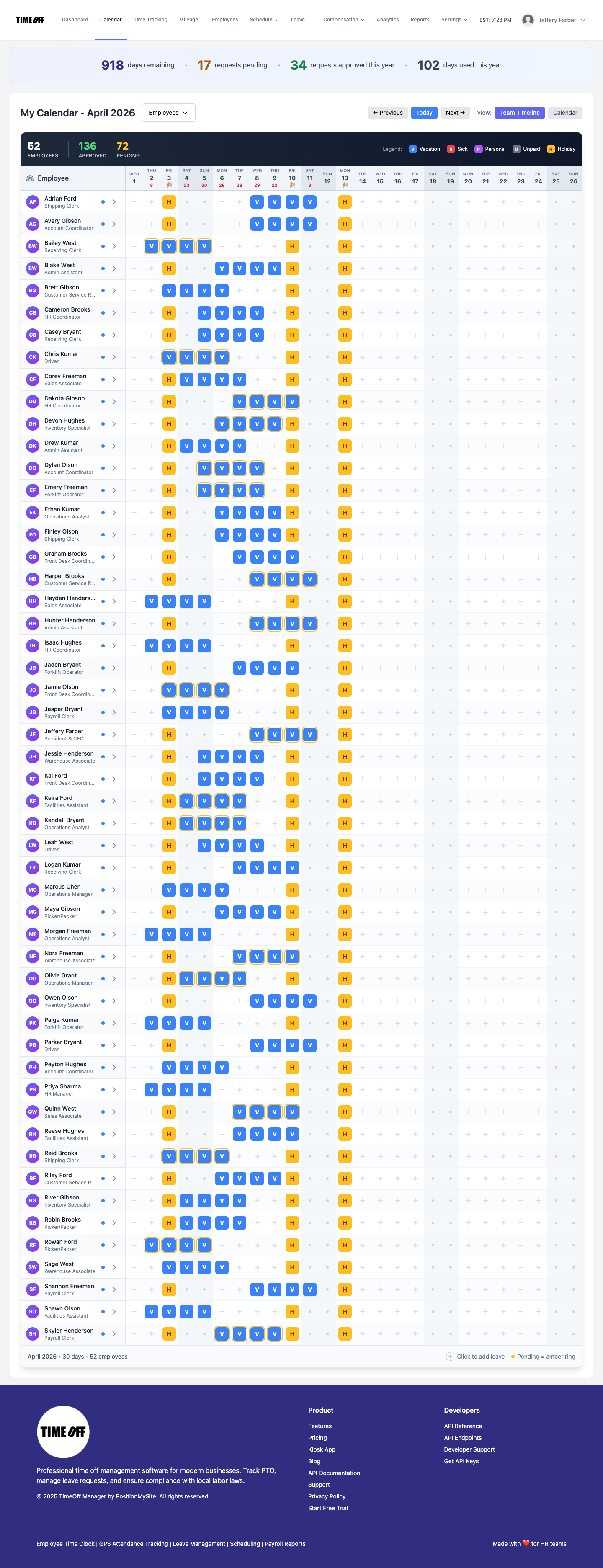
- Consistent Scheduling: When you're building shift templates or managing the schedule, you can see approved time off directly on the calendar, preventing over-scheduling or coverage gaps.
This integrated approach simplifies HR compliance 2026, making it easier to manage diverse leave policies, track overtime, and ensure your payroll data is clean and accurate, regardless of which side of the border your employees are on.
Employee vs. Manager Flows for Cross-Border Leave
Let's look at how TimeOff Manager streamlines the experience for both employees and managers, crucial for managing varied vacation and parental leave policies across borders.
For employees, their dashboard is their central hub. They can easily see their current leave balances, including vacation days, sick leave, and any specific parental leave entitlements based on their location. Submitting a leave request is straightforward: they choose the leave type, dates, and add a note. This self-service model empowers employees and reduces administrative burden on HR.
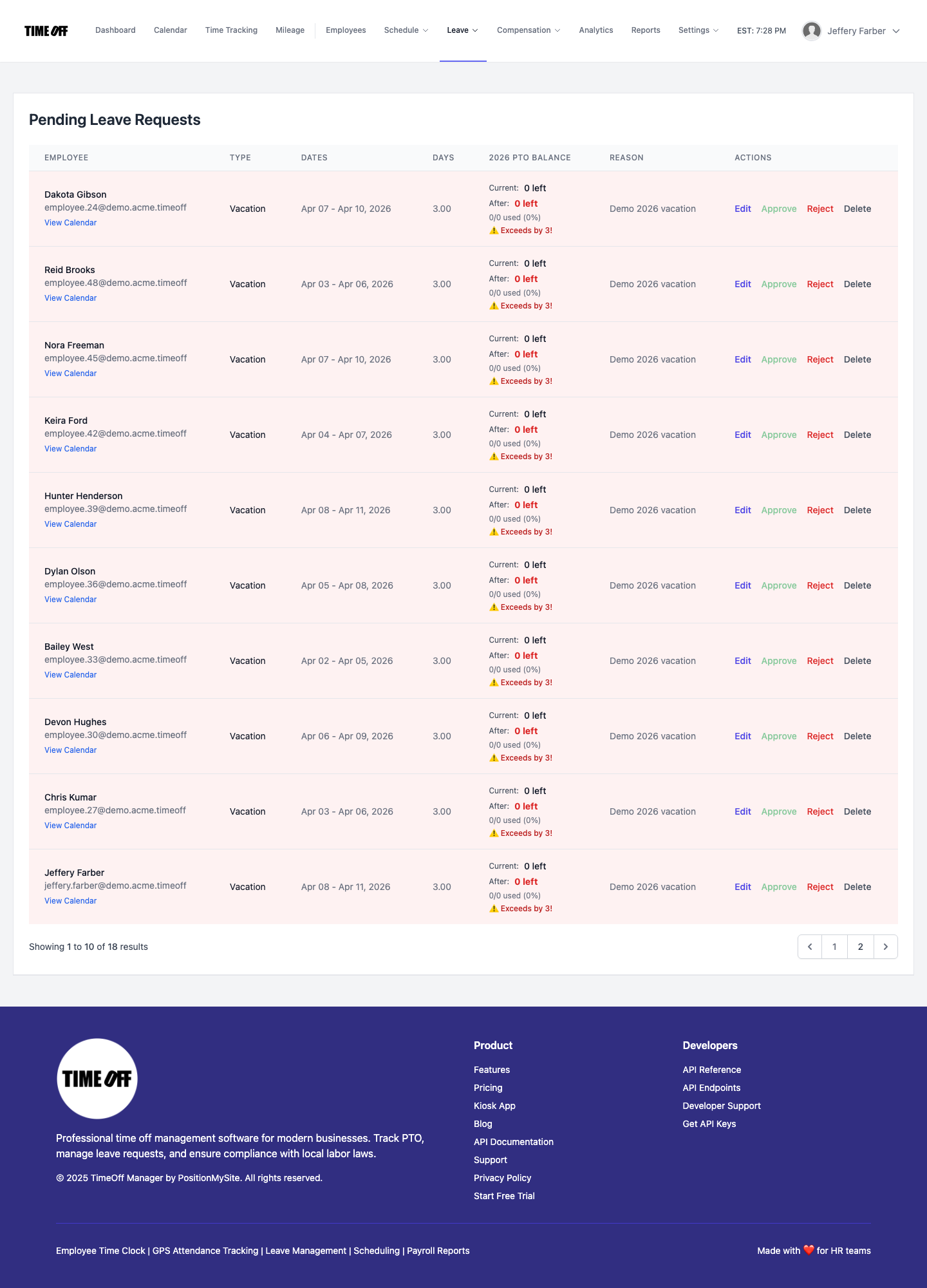
Once submitted, the request flows directly to their manager. Managers use the Manager & HR hub at /admin/requests to review pending approvals. Here, they see not just the request, but also the employee's current leave balance, their work schedule, and any overlapping team leave. This context is vital for making informed decisions, especially when balancing staffing needs with statutory leave requirements in different regions.
After approval, the leave automatically updates the employee's balance and appears on team calendars. This means when a manager opens the weekly grid at /timesheet, they see approved leave hours alongside actual punches, providing a complete picture before overtime calculations or payroll export. This prevents a common pitfall: a manager approving PTO without seeing how it impacts the work week or potential overtime costs.
Workflow Walkthrough: Managing Canadian & US Vacation and Parental Leave
Here’s how you can use TimeOff Manager to streamline managing diverse vacation and parental leave entitlements across Canada and the US, ensuring HR compliance 2026:
-
Configure Company Settings and Leave Types
First, you'll set up your company's core work week and time zone preferences in Company Settings. Then, navigate to /admin/leave-types. Here, you'll create distinct leave types for your Canadian and US operations. For Canada, you might create "Ontario Statutory Vacation," "Quebec Maternity Leave," or "Federal Parental Leave." For the US, you could have "Company Vacation (US)," "FMLA Leave," or "California Paid Sick Leave." For each, define:
- Accrual rules: How many hours/days accrue per pay period or year, and after what tenure.
- Maximum balance: Any limits on how much leave can be carried over.
- Eligibility: Which employee groups are eligible for which leave type.
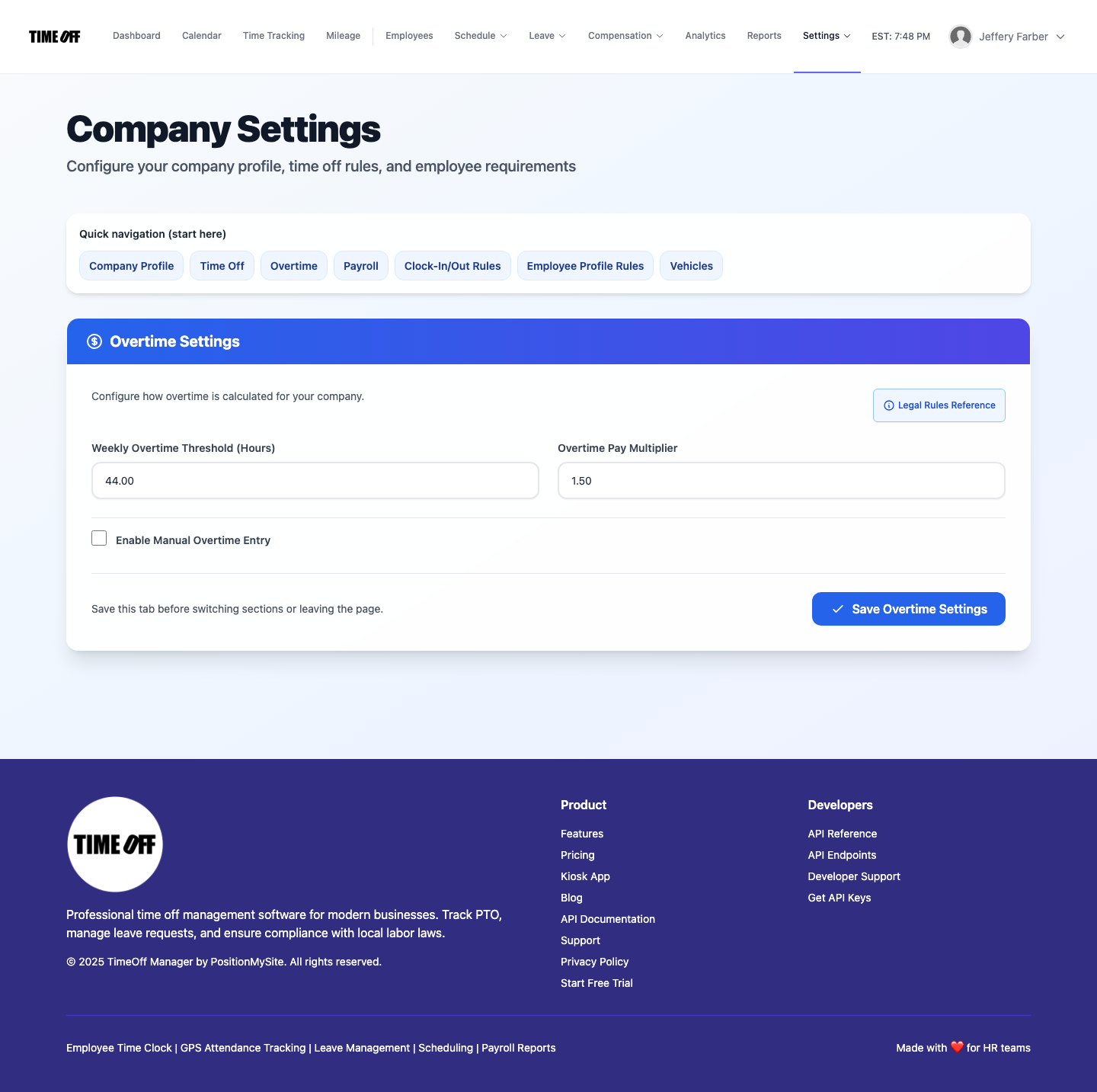
Set up core company work week and overtime defaults, which can be adapted for different regions. -
Assign Leave Policies to Employees
Once your leave types are defined, go to the Employees admin roster. For each employee, edit their profile to assign the appropriate leave types based on their country, province, or state of employment. This ensures that a Canadian employee automatically accrues statutory vacation, while a US employee accrues company-defined PTO.
-
Employee Leave Requests
Employees log into their dashboard and go to My requests to submit time off. They select the relevant leave type (e.g., "Ontario Statutory Vacation" or "Company Vacation (US)"), specify dates, and add any necessary notes or attachments.
-
Manager Review and Approval
Managers receive notifications for pending leave requests. They navigate to /admin/requests. Here, they can review the request, see the employee's current leave balance, and check the team timeline calendar for potential coverage conflicts. This holistic view prevents approving leave that would violate statutory minimums or leave your team understaffed. They approve or deny the request with a click.
-
Schedule Adjustment and Coverage Planning
With approved leave automatically populating the schedule, managers can use schedule management to adjust shifts or assign new ones to ensure adequate coverage. The system validates against any scheduling validation rules you've set, preventing violations of labor laws or company policies.

The schedule management tool allows you to plan for leave, ensuring proper coverage and adherence to validation rules, critical for cross-border operations. -
Time Tracking and Overtime Visibility
Employees clock in and out using the PIN kiosk at /clockin, web, or mobile app. All punches, alongside approved leave, feed into the Manager & HR hub at /timesheet. Before payroll, managers review the weekly grid, seeing total hours worked, leave hours, and any calculated overtime based on company or regional rules set in /admin/overtime. This ensures that statutory holidays and overtime rules are correctly applied, whether for a Canadian or US employee.

The weekly timesheet grid gives managers a comprehensive view of hours worked and approved leave before payroll, crucial for managing cross-border teams. -
Payroll Handoff and Reporting
Once timesheets are reviewed and approved, the data is ready for payroll. TimeOff Manager's integrated system means your payroll provider receives accurate, reconciled data for both regular hours, overtime, and all types of leave. You can also generate reports and exports from /admin/analytics to monitor leave trends, accrual liabilities, and ensure ongoing HR compliance 2026 across all your locations.

The analytics dashboard provides insights into leave trends and other key metrics, helping you monitor compliance and plan for the future.
What to Look for in HR Software for Overtime Rules and Cross-Border Teams (2026)
When you're evaluating PTO software, especially with HR compliance 2026 in mind for teams across Canada and the US, don't settle for generic solutions. Here's a buyer checklist:
- Configurable Leave Types: Can you create custom leave types with specific accrual rules, carryover limits, and eligibility criteria for different regions (e.g., Canadian provinces, US states, or even specific cities)?
- Integrated Time Tracking: Does it combine PTO management with robust time clock software (web, mobile, kiosk, GPS time clock) to give you a single source of truth for all hours?
- Overtime Tracking and Rules: Can you define and apply different overtime rules based on jurisdiction, ensuring you're compliant with both federal and provincial/state labor laws? See /admin/overtime for how we do this.
- Employee Self-Service: Does it empower employees to view their own balances and submit requests easily, reducing HR's administrative load?
- Manager Approval Workflows: Are approval processes clear, with managers having full context (balances, schedules, team availability) to make informed decisions?
- Scheduling Integration: Does approved leave automatically populate the employee scheduling software, helping you plan for coverage and avoid conflicts?
- Reporting & Analytics: Can you generate detailed reports on leave accruals, usage, and liabilities for compliance and financial planning?
- Payroll Integration: Does it provide clean, accurate data exports that seamlessly integrate with your existing payroll provider?
The biggest pitfall for SMBs with cross-border teams is relying on separate products for different functions. A leave-only tool won't show you real-time punches. A time clock won't manage complex accruals. You need one workflow that ties PTO, time tracking (including GPS and mileage), scheduling, and payroll data together to truly simplify HR compliance in 2026.
Compliance Considerations for Cross-Border Teams (2026)
Navigating HR compliance across Canada and the US is complex. While TimeOff Manager provides the tools to manage your policies, remember that it's your responsibility to understand and implement the correct legal requirements for each jurisdiction. This article is not legal advice.
For Canadian operations, familiarize yourself with the federal Canada Labour Code and the specific labor standards acts of each province where you have employees. Resources like Employment and Social Development Canada or provincial labor ministry websites are invaluable. For example, Ontario's Employment Standards Act outlines specific vacation entitlements.
For US operations, the federal Family and Medical Leave Act (FMLA) and Fair Labor Standards Act (FLSA) are key, but state and even local laws often add layers of complexity, especially regarding paid sick leave or vacation payout rules. Always consult with legal counsel or HR professionals specializing in cross-border compliance to ensure your policies and practices meet all applicable laws.
See How TimeOff Manager Handles Cross-Border Leave
Curious how TimeOff Manager makes managing diverse vacation and parental leave policies across Canada and the US simple? Take a look at how you can set up a custom leave type for a specific Canadian province, assign it to an employee, and then see that leave reflected on the team calendar. This specific workflow ensures accurate accruals and transparent scheduling for your cross-border team.
You can access our resettable demo right now to explore the Manager & HR hub, configure custom leave types, and simulate employee requests. See firsthand how an integrated system can transform your HR compliance in 2026.
FAQ: HR Compliance 2026 for Canada vs. US Leave
What is the average vacation days in Canada vs. US?
Canadians are legally entitled to at least 10 paid vacation days per year, often increasing with tenure. In contrast, the US has no federal mandate for paid vacation, with the average American worker typically receiving around 11 employer-provided days, but this is a benefit, not a legal right.
How does Canada parental leave compare to US parental leave?
Canada offers robust parental leave benefits, typically up to 69 weeks under the Employment Insurance program, with job protection. The US federal FMLA provides up to 12 weeks of *unpaid*, job-protected leave, with paid parental leave varying by state or individual employer policy.
What is the best HR software for tracking vacation entitlement across provinces?
The best HR software for tracking vacation entitlement across provinces and states allows you to create custom leave types, set specific accrual rules per region, and manage employee eligibility. TimeOff Manager does this by letting you define distinct leave policies for different locations, ensuring compliance with varied statutory requirements.
What is the average PTO in Canada for SMBs?
For SMBs in Canada, the average PTO is at least the statutory minimum of 10 paid vacation days (two weeks) after one year of employment, with many employers offering more to remain competitive. This typically increases to 15 days (three weeks) after 5-10 years of service, depending on provincial legislation.
How can TimeOff Manager help with HR compliance in 2026 for cross-border teams?
TimeOff Manager helps with HR compliance in 2026 by providing configurable leave types for different statutory requirements, integrated time tracking, overtime rule management, and comprehensive reporting. This ensures accurate tracking of vacation, parental leave, and hours worked across Canadian provinces and US states, reducing compliance risk.
Can TimeOff Manager track both statutory and company-defined leave policies?
Yes, TimeOff Manager allows you to create an unlimited number of custom leave types. This means you can define both statutory leave (like "Ontario Statutory Vacation") and company-defined policies (like "US Company PTO"), each with its own accrual rules, eligibility, and carryover limits, all within the same system.